To be honest, things have been moving fast lately. Everyone’s talking about sustainability, right? Not just the big guys, but even the smaller workshops are trying to figure out how to use recycled materials. It's good, I guess. But a lot of times, it feels like they’re chasing a trend without really thinking about how it affects the quality. Have you noticed how some of these "eco-friendly" bags fall apart after a month? Yeah, it's a problem.
And don't even get me started on design. So many engineers think they can design something perfect in the office, but then you get to the construction site and it just...doesn't work. I encountered this at a factory in Zhejiang province last time - a supposedly reinforced corner that ripped the first time someone actually tried to lift a full bag. It's frustrating, really. Details matter. A tiny bit of extra stitching can be the difference between a successful load and a complete disaster.
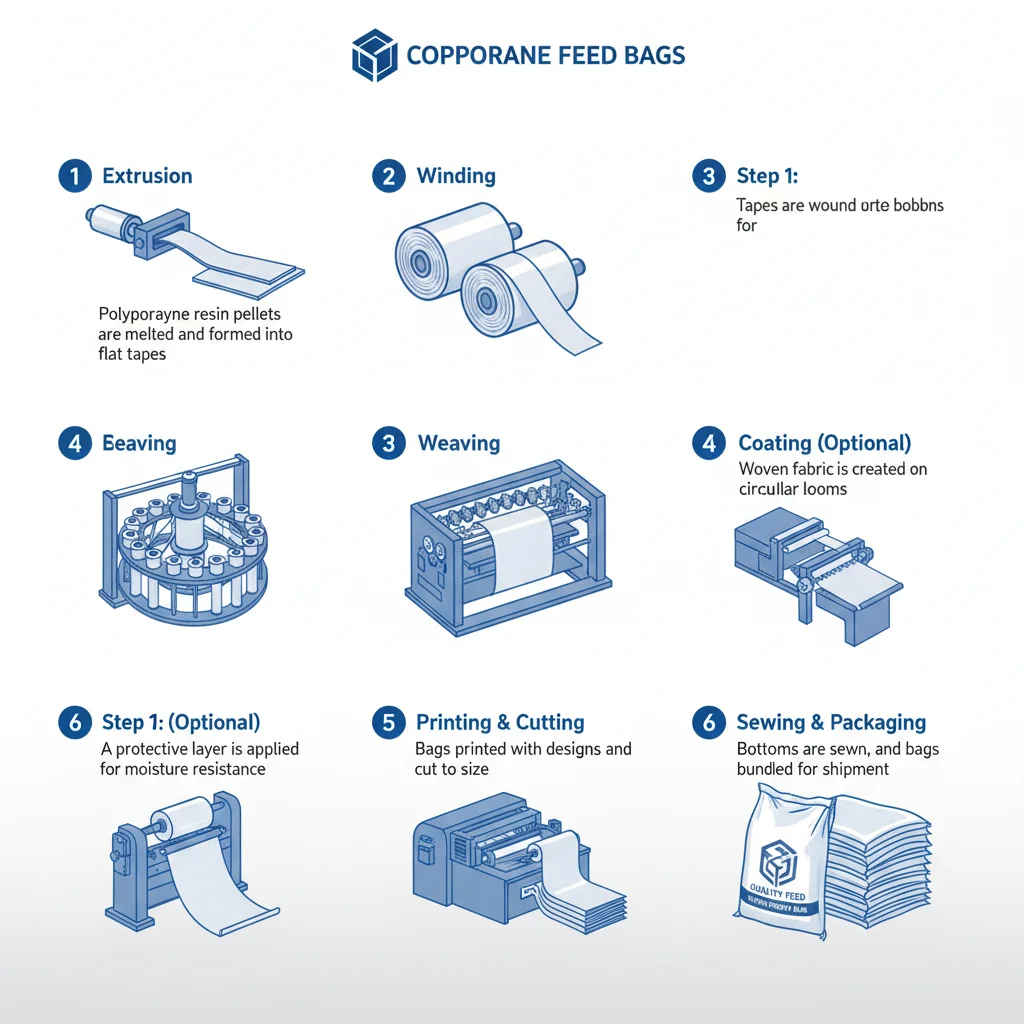
We mostly work with woven polypropylene, obviously. It's the workhorse of the industry. It smells like plastic, right? That sort of chemical, slightly oily scent. You get used to it. And feel-wise… it's rough, not like a smooth plastic sheet. You can tell the quality by how tightly woven it is. A good bag will feel almost stiff, like it can take a beating. The cheaper stuff feels flimsy, like it'll tear with a hard look. We've experimented with different deniers, different weaving patterns... it's a constant tweaking process.
The Current Landscape of woven polypropylene bags
Honestly, the demand is still huge. Everything needs to be moved somewhere, and woven polypropylene bags are still the most cost-effective way to do it. But it's not just about volume anymore. People want specific features, better UV resistance, higher load capacities… the requests keep coming. Strangely, there’s also been a push for bags that are easier to recycle - which is ironic, considering PP isn't exactly known for its recyclability.
It's a global market, of course. I've seen these bags used everywhere, from transporting grain in Africa to packaging fertilizer in South America. Even here, domestically, they're essential for construction, agriculture, and even retail. It's a pretty universal solution, really.
Design Pitfalls and Practical Considerations
The biggest mistake I see? Over-engineering. Engineers love to add extra features, reinforced this, laminated that… but a lot of the time, it just adds cost and complexity without actually improving performance. Sometimes, simpler is better. I've seen bags with all sorts of fancy handles and closures that just ended up breaking faster than a basic sewn loop. You gotta think about how the bag will actually be used – thrown around, stacked, dragged… it takes a beating.
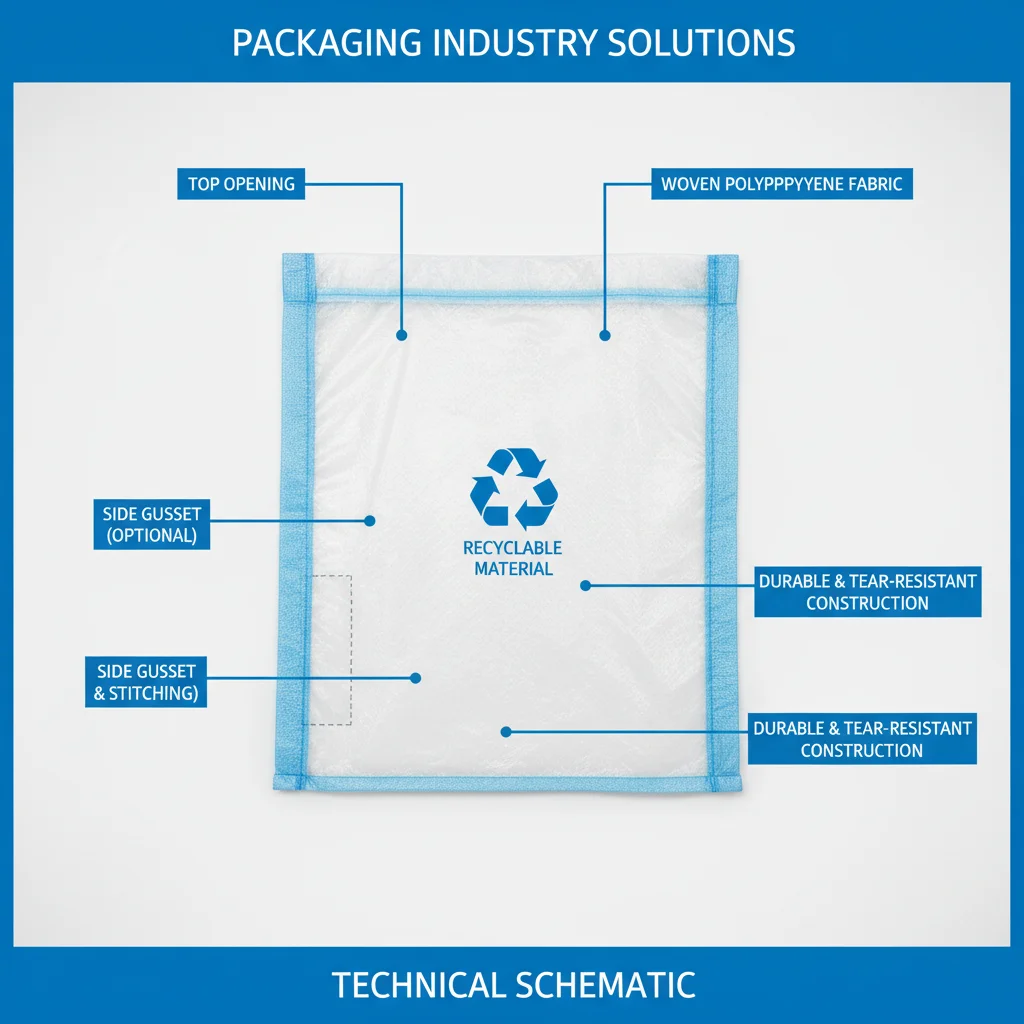
Another thing: gussets. Getting the gusset right is crucial. Too small, and the bag won’t hold enough. Too big, and it’s unstable. It's a surprisingly delicate balance. We spend a lot of time prototyping different gusset designs.
And the printing! That’s a whole other headache. People want high-resolution logos and intricate designs, but the PP surface isn’t exactly ideal for printing. Getting a clear, durable print that won't smudge or fade is always a challenge.
Material Properties and On-Site Handling
We primarily use virgin polypropylene resin, but we're increasingly incorporating recycled content where possible. It's tough, though. The recycled stuff isn’t always consistent in quality. You have to be very careful about blending it with the virgin resin to maintain strength and durability. I’ve had suppliers try to pass off really low-grade recycled material, and it’s obvious the moment you start weaving it.
Handling the material itself is… not glamorous. It's dusty, it gets stuck in everything, and it can be surprisingly static-y. We have to keep the factory well-ventilated and use anti-static sprays to prevent the yarn from clinging to everything. It’s a constant battle.
The weave density is everything. You can feel it. A tighter weave means more strength, more resistance to tearing and abrasion. We test different weave patterns to find the optimal balance between strength and cost. It’s not always about going for the highest density, you have to consider the weight and flexibility too.
Real-World Testing and Usage Patterns
Forget the lab tests, honestly. Those are good for basic quality control, but they don’t tell you how a bag will perform in the real world. We do drop tests, fill tests, stacking tests… but we also send bags out to construction sites and let the workers use them for a few weeks. That’s where you really find out what works and what doesn’t.
I've noticed that users rarely handle the bags the way we expect them to. They’ll overload them, drag them across rough surfaces, leave them out in the sun… it’s brutal. That’s why we always add a safety margin to our load capacity ratings. You've gotta assume people will push it to the limit.
Woven Polypropylene Bag Performance Metrics
Advantages, Disadvantages, and Customization
The biggest advantage, hands down, is cost. You just can't beat it. And they're surprisingly durable. A well-made woven polypropylene bag can last for years, even under harsh conditions. But, let’s be real, they’re not pretty. And they’re not the most environmentally friendly option. That’s the trade-off.
We do a lot of customization. Size, color, printing, handle types… you name it. Last month, a client wanted a bag with RFID tracking tags sewn in, so they could monitor their inventory. It was a pain to implement, but we got it done. It's always something.
A Customer Story: The Debacle
Last month, that small boss in Shenzhen who makes smart home devices insisted on changing the interface to for all the handles. He thought it looked more “modern”. I tried to explain to him that workers on a construction site don’t care about modern, they care about reliable. But he wouldn’t listen. He wanted it, he got it.
The result? The connectors kept breaking. They weren't designed to withstand the kind of abuse those bags get. He ended up having to switch back to the standard sewn loops, and lost a ton of money on the initial order. It was a classic case of form over function. It just goes to show you, sometimes the simplest solution is the best.
Anyway, I think he learned a valuable lesson.
Material Performance Comparison
We constantly evaluate different PP variations. It’s all about balancing cost with performance. Higher denier, obviously, is stronger, but it also costs more. Different additives affect UV resistance, flexibility, and printability. It's a complicated game.
And let’s not forget the coatings. Lamination can add a layer of water resistance and protect the printing, but it also makes the bag harder to recycle. It’s always a trade-off.
We’ve also been looking at bio-based polypropylene, but the cost is still prohibitive for most applications. Maybe in the future, but for now, it's just not practical.
Key Material Characteristics for Woven Polypropylene Bags
| Material Type |
Tensile Strength (MPa) |
UV Resistance (Hours) |
Recyclability Score (1-5) |
| Virgin PP |
35-45 |
500-700 |
3 |
| Recycled PP (20%) |
30-40 |
400-600 |
4 |
| PP with UV Stabilizer |
38-48 |
800-1000 |
3 |
| Laminated PP |
40-50 |
600-800 |
2 |
| Bio-Based PP |
32-42 |
450-650 |
5 |
| Reinforced PP |
45-55 |
700-900 |
3 |
FAQS
It really depends on the bag’s construction - denier, weave density, seam strength – but generally, a standard 100cm x 100cm bag can handle around 100-150kg safely. We always recommend checking the bag’s specifications before loading it, though. You don’t want it to fail halfway up a crane! Overloading is a common issue, and it's rarely pretty.
They’re reasonably resistant to moisture, but prolonged exposure to UV radiation can degrade the material over time. That's why we offer UV-stabilized options. Extreme cold can also make the plastic more brittle, increasing the risk of tearing. It's all about choosing the right material and additives for the intended environment.
Recycling PP is tricky. It's technically recyclable, but the infrastructure isn’t widely available. Often, it ends up in landfills. However, there’s a growing market for recycled PP, and we’re actively exploring ways to incorporate more recycled content into our bags. It's a slow process, but it’s important.
Absolutely! We offer a wide range of color options and printing capabilities. We can print logos, text, and even complex designs. The print quality depends on the surface texture of the bag and the printing method used. We always recommend sending us a high-resolution artwork file for the best results. Keep in mind that darker colors are generally more durable than lighter ones.
Circular woven bags are generally stronger and more durable because the yarns are twisted, offering better resistance to tearing. Flat woven bags are typically cheaper to produce but are less robust. The choice depends on the intended application and load requirements. Circular woven is the go-to for heavy-duty applications.
Store them in a dry, well-ventilated area, away from direct sunlight and extreme temperatures. Avoid stacking them too high, as this can cause deformation or damage. Properly stored, they can last for years. It’s simple stuff, but people often overlook it.
Conclusion
So, yeah, woven polypropylene bags. They're not glamorous, they’re not always eco-friendly, but they are reliable, cost-effective, and incredibly versatile. They're the workhorses of the materials handling world, and they’ll likely remain so for the foreseeable future. We're constantly trying to improve them – making them stronger, more durable, more sustainable – but at the end of the day, they're a simple solution to a complex problem.
Ultimately, whether this thing works or not, the worker will know the moment he tightens the screw. If it holds, it holds. If it breaks, it breaks. And we learn from both. That's what I've learned after years of wandering around construction sites and factories. It's all about real-world performance.